Water mitigation in the Dallas area
Water mitigation is the work that keeps water damage from spreading. This guide covers how a crew inspects, why the water category matters, and the drying targets it works toward.
Calls connect to an independent restoration company.
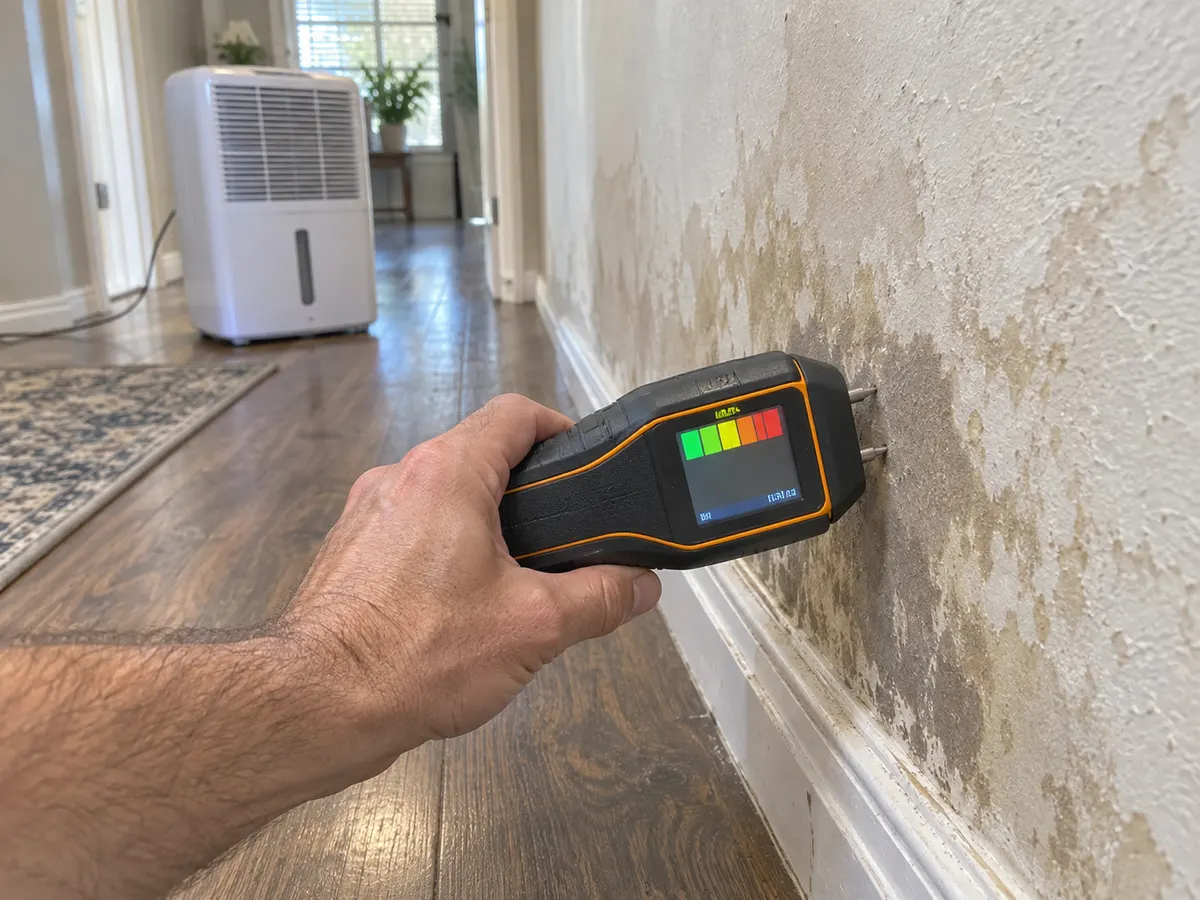
The inspection comes first
The IICRC lists the restorer’s initial response as a site safety survey, verifying the source of water intrusion, identifying the extent of water migration, making a preliminary determination of the water category, identifying pre-existing damage and establishing dry standards and drying goals (IICRC).
Water category changes the plan
For Category 1 water, the IICRC says the restorer can proceed without contamination controls. For Category 2 or 3, remediation should occur before restorative drying, with contamination controls and worker protection (IICRC).
Drying targets
The EPA says water-damaged areas and items should be dried within 24 to 48 hours, and indoor humidity kept below 60 percent, ideally 30 to 50 percent (EPA).
Town pages
Water mitigation by town
Dallas County: water mitigation in Carrollton, water mitigation in Dallas, water mitigation in Highland Park, water mitigation in University Park.
Collin County: water mitigation in Frisco, water mitigation in Lowry Crossing, water mitigation in Murphy, water mitigation in Wylie.
Denton County: water mitigation in Double Oak, water mitigation in Flower Mound, water mitigation in Hebron, water mitigation in Hickory Creek, water mitigation in Little Elm, water mitigation in The Colony.
Rockwall County: water mitigation in Fate.
Kaufman County: water mitigation in Crandall, water mitigation in Heartland.
Need water mitigation?
One call connects you with an independent restoration company.
Call (844) 690-4312