Water mitigation in Highland Park, TX
Need water mitigation in Highland Park? One call connects you with an independent restoration company that serves Highland Park and Dallas County.
Calls connect to an independent restoration company.
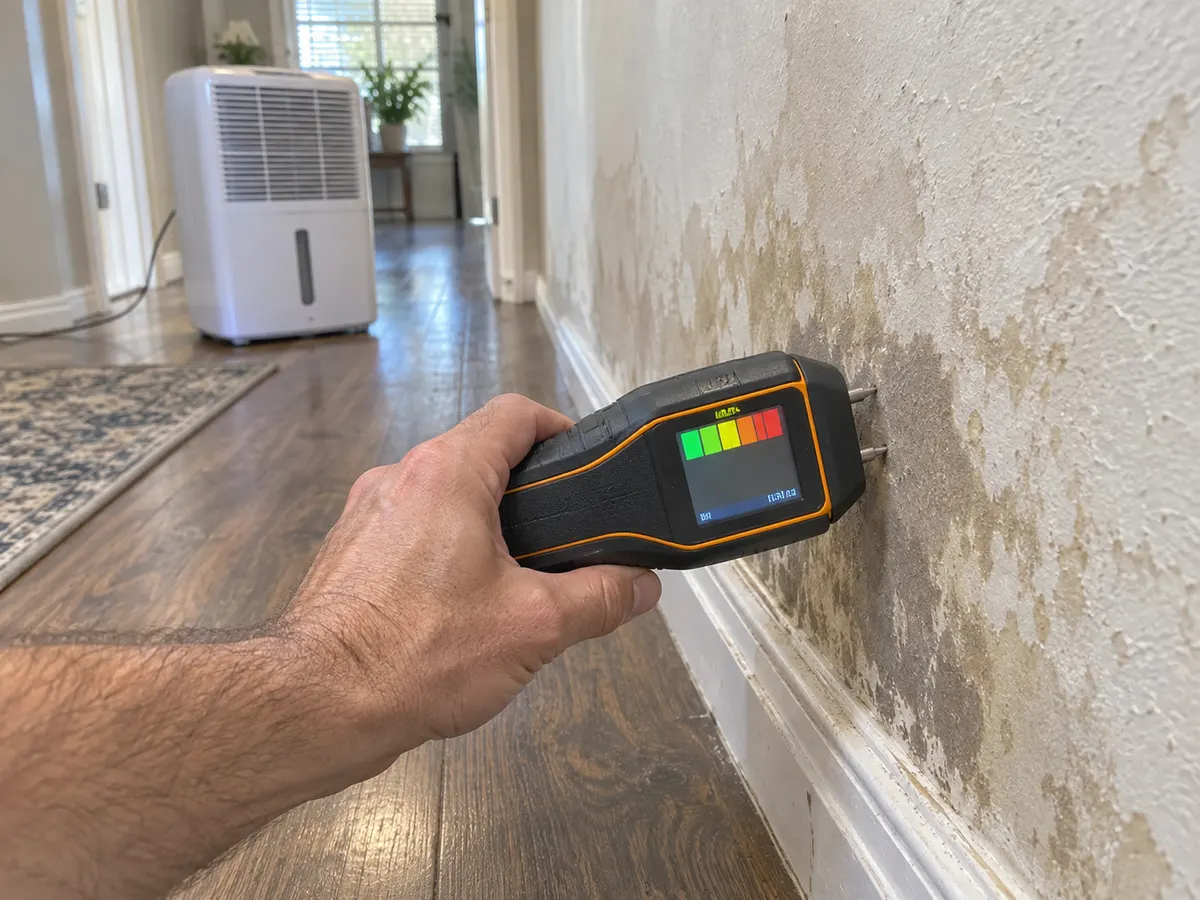
What water mitigation means in Highland Park
Mitigation in Highland Park starts with an inspection, not with fans. Under the IICRC’s S500 framework, the restorer verifies the source of the water, identifies the extent of migration, arrives at a preliminary determination of the water category and establishes dry standards and drying goals (IICRC). Everything after that, from extraction to equipment placement, follows from those readings.
The water category changes the plan. For Category 1 water, the IICRC says the restorer can proceed without contamination controls; for Category 2 or 3, remediation should happen before restorative drying, with contamination controls and worker protection (IICRC). Drying targets come from the EPA: wet materials dry within 24 to 48 hours, and indoor humidity below 60 percent, ideally 30 to 50 percent (EPA).
For a clean-water leak, see water damage restoration in Highland Park. The Dallas-area water mitigation guide covers the process in more depth. Other Highland Park pages: crawl space water removal, sewage cleanup, flood restoration, water extraction, burst pipe water damage, water damage cleanup and emergency water removal.
The water mitigation process
- InspectSource, extent and category of water are identified.
- ControlContamination controls go up if the water is Category 2 or 3.
- ExtractStanding water is removed.
- Dry to standardDehumidifiers and air movers run until materials reach the drying goal.
Highland Park details
What matters in Highland Park
The IICRC notes that the age of the structure and its history of previous water damage are part of the information a restorer gathers (IICRC). In Highland Park, the median home was built in 1977, 20% of homes date from the 1990s or 2000s and 51% predate 1980 (U.S. Census Bureau, ACS 2020-2024). Census estimates put the median year built in Highland Park at 1977, with 51% of homes built before 1980 (U.S. Census Bureau, ACS 2020-2024).
Housing in Highland Park is older than the typical Dallas County town on this site: a median year built of 1977, against 1988 for the middle of the other 11 (U.S. Census Bureau, ACS 2020-2024). Of the 33 towns covered here, Highland Park ranks 1st oldest by median year built. 20% of homes here were built in the 1990s or 2000s (U.S. Census Bureau, ACS 2020-2024).
Water mitigation pages for towns near Highland Park: University Park (1 miles), Dallas (3 miles) and Carrollton (12 miles).
- Population8,773 residents and 3,667 housing units (U.S. Census Bureau, ACS 2020-2024).
- Housing ageMedian year built 1977; 51% built before 1980 (U.S. Census Bureau, ACS 2020-2024).
- Home types81% detached houses, 14% in multi-unit buildings, 0% mobile homes (U.S. Census Bureau, ACS 2020-2024).
- Owners89% of occupied homes are owner-occupied; median owner home value $1,989,900 (U.S. Census Bureau, ACS 2020-2024).
- Utility contactHighland Park Utility Customer Service can be reached at 214-521-4161, weekdays 7:30 am to 4:30 pm; its listed number for water emergencies and after-hours problems is 214-521-5000 (Highland Park Utility Customer Service).
- CountyHighland Park is in Dallas County. Highland Park covers 2.2 square miles of land (U.S. Census Gazetteer).
Water mitigation questions
What is the difference between water mitigation and restoration?
Mitigation is the work that stops damage from spreading: inspection, water removal and drying. Restoration can also include rebuilding. The IICRC describes the first steps as verifying the source, identifying water migration and setting drying goals (IICRC).
Is this a restoration company in Highland Park?
No. 214 Damage is a referral service. Your call connects you with an independent restoration company that serves Highland Park.
Water mitigation in Highland Park
One call connects you with an independent restoration company.
Call (844) 690-4312