Sewage cleanup
Toilet, tub and floor-drain backups are Category 3 water and need containment and protective gear. See sewage cleanup in Dallas.
For water damage restoration in Dallas, call the number on this page and you will be connected with an independent restoration company that does water removal, extraction and drying. Wet materials dry faster and cheaper the earlier the work starts.
Your call goes to an independent restoration company that serves Dallas.
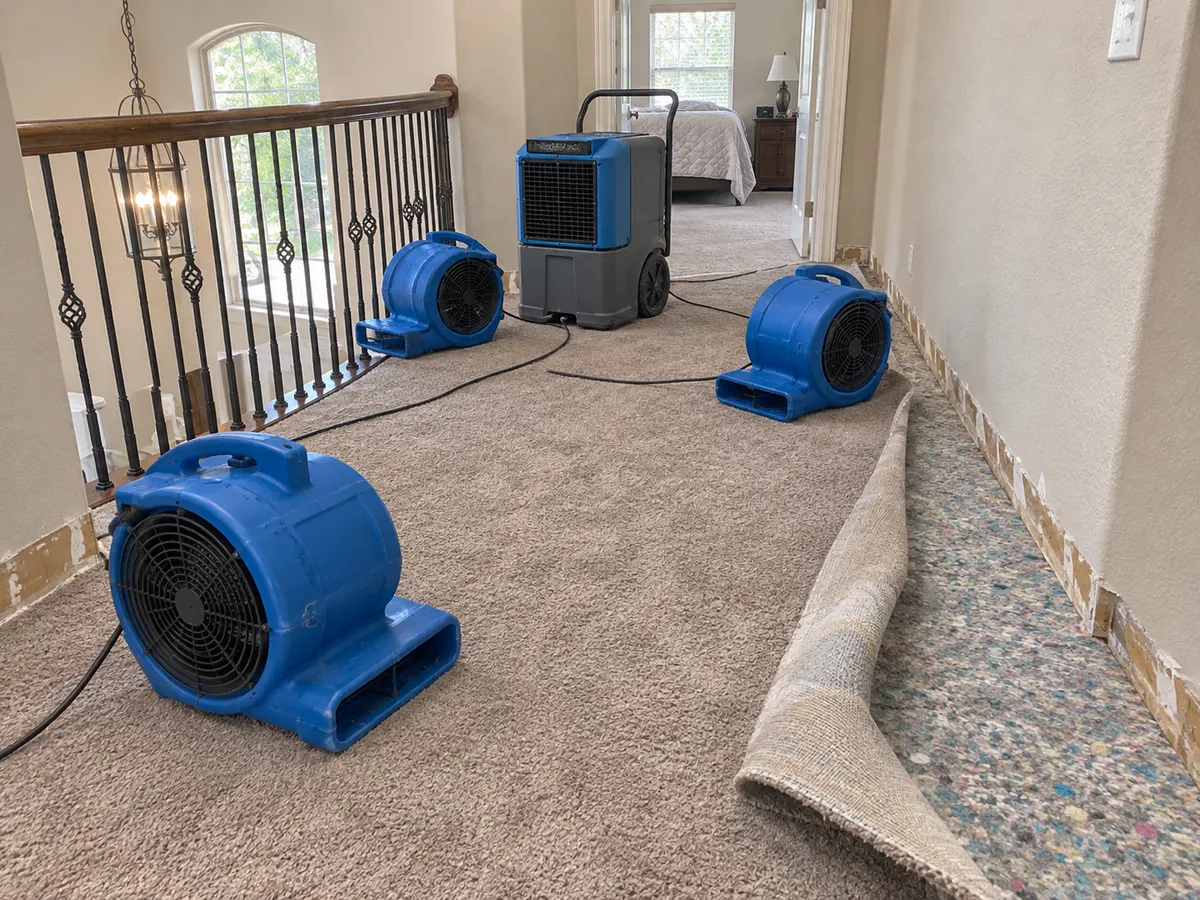
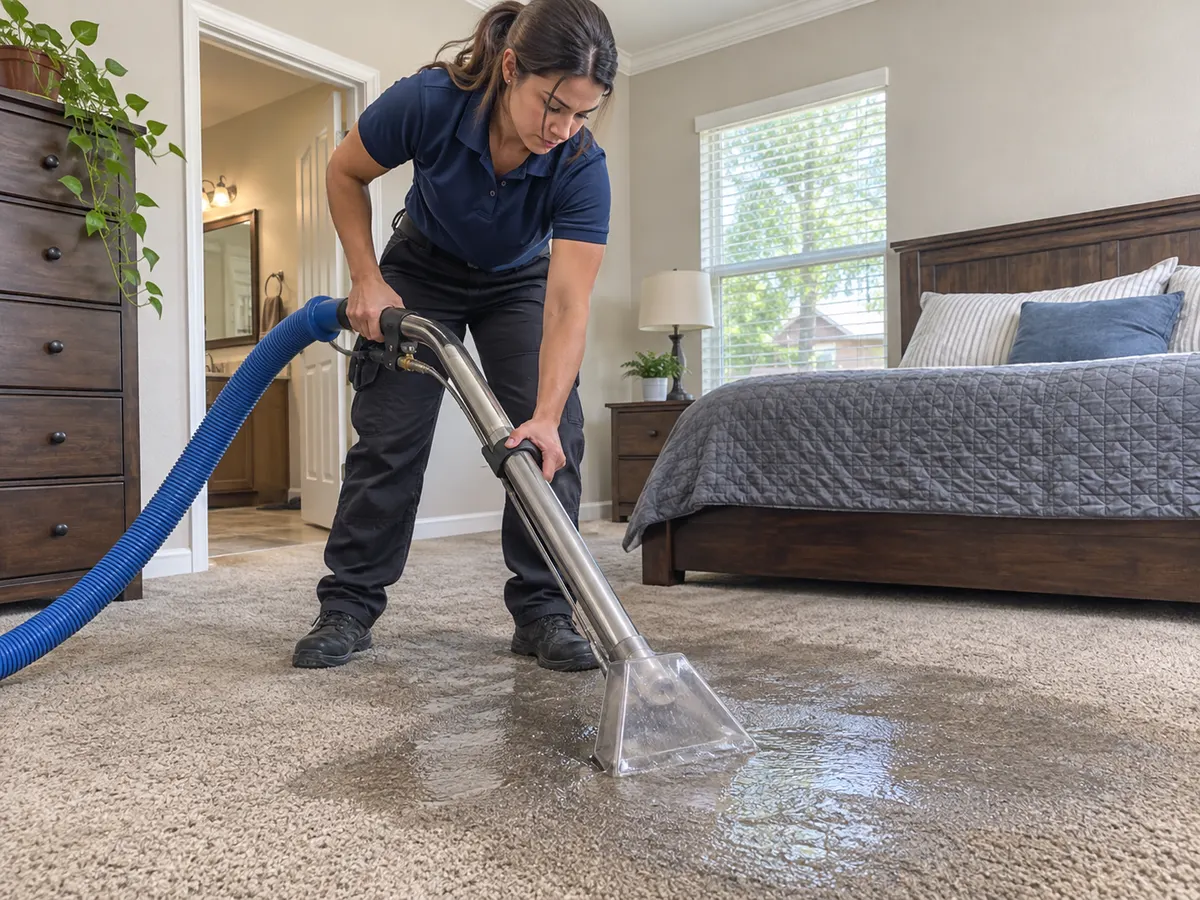
Before anything can dry, the standing water has to go. The EPA’s moisture guide tells homeowners to remove standing water quickly (EPA). In a Dallas home that usually means extraction wands on carpet, a squeegee and wet vacuum on tile, and a pump if the water is deep.
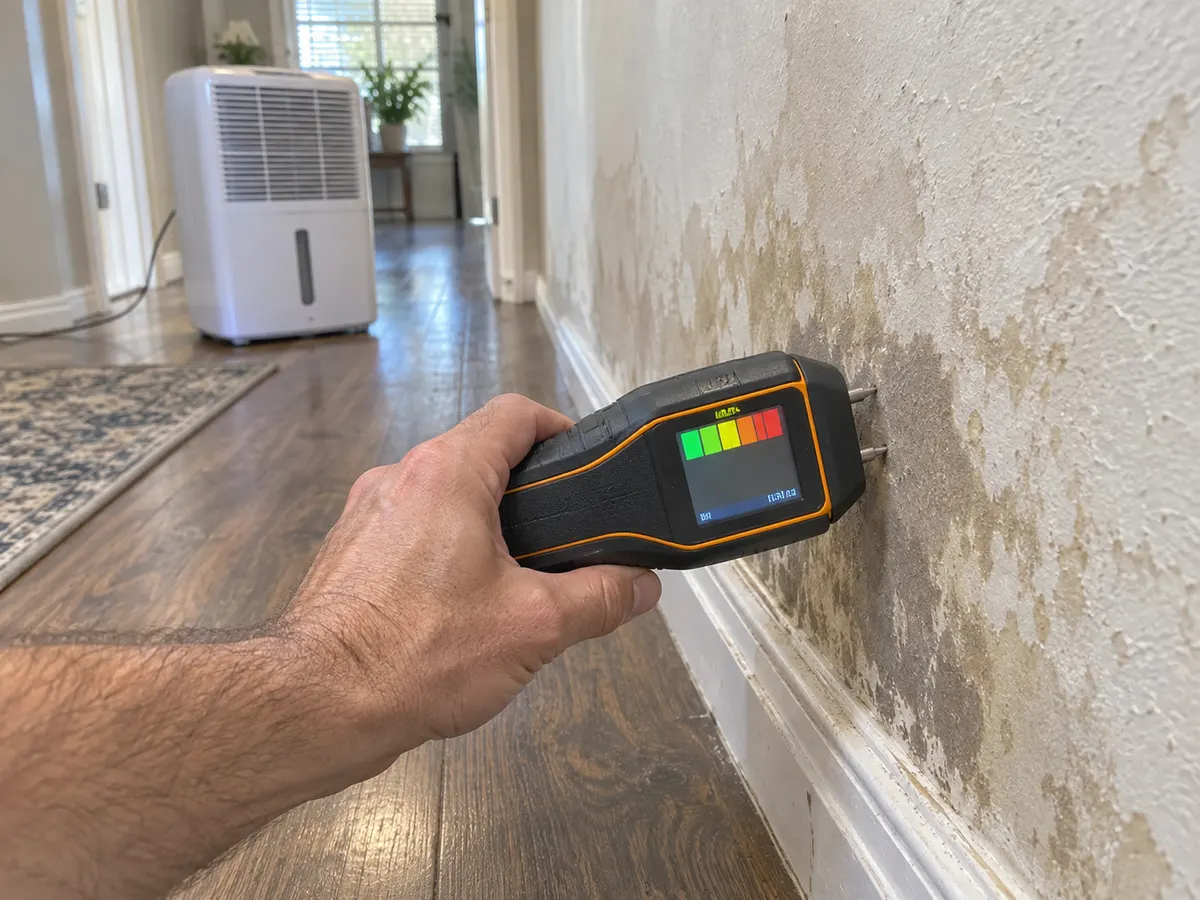
Structural drying comes next, and timing matters. EPA guidance puts the window at 24 to 48 hours for drying wet materials (EPA). Dehumidifiers and fans do most of the work (CDC), and moisture readings tell the crew when walls and subfloor are actually dry rather than just dry to the touch. Indoor humidity should stay under 60 percent (EPA).
Some calls need a different approach than a clean-water leak. These Dallas pages go into detail:
Toilet, tub and floor-drain backups are Category 3 water and need containment and protective gear. See sewage cleanup in Dallas.
Homes on pier-and-beam foundations can hold water under the floor. See crawl space water removal in Dallas.
Rising water from a creek or river is one of the IICRC’s examples of Category 3 water. See flood restoration in Dallas.
Pumping and extracting standing water from carpet and hard floors. See water extraction in Dallas.
How a crew finds where the water went and sets drying goals. See water mitigation in Dallas.
A split supply line can release a lot of water fast. See burst pipe water damage in Dallas.
What to clean, what to keep and what to throw out once the water is gone. See water damage cleanup in Dallas.
Water coming in right now: shut-offs, electrical safety and the first hour. See emergency water removal in Dallas.
About Dallas
Census estimates put the median year built in Dallas at 1981, with 48% of homes built before 1980 (U.S. Census Bureau, ACS 2020-2024). 41% of housing units in Dallas are detached houses and 28% are in buildings with 20 or more units (U.S. Census Bureau, ACS 2020-2024). In stacked units, a leak upstairs can reach the unit below before anyone notices. Like most homes around Dallas, houses in Dallas are almost never built with basements (Dallas Morning News). Water that gets inside spreads across the floor or ends up in a crawl space.
Neighboring towns with their own pages: Highland Park, University Park and Mesquite. All Dallas County towns are listed on the Dallas County page.
Water outside your property line may be a utility main, not a plumbing leak. Dallas Water Utilities can be reached at 214-651-1441, weekdays 8 am to 5 pm; its listed number for water emergencies and after-hours problems is 311 (214-670-3111 from outside the city) (Dallas Water Utilities).
The EPA says wet areas and items should be dried within 24 to 48 hours (EPA).
It can. 48% of homes in Dallas were built before 1980 (U.S. Census Bureau, ACS 2020-2024). Older homes are more likely to have wood subfloors or crawl spaces that hold water out of sight, so moisture readings matter more.
No. 214 Damage is a referral service. Your call connects you with an independent restoration company that serves Dallas.
One call connects you with an independent restoration company for water removal and drying.
Call (844) 690-4312